Our Blaufränkisch reflects the diversity of the soils in Mittelburgenland. It brings loam and limestone - and thus depth and fineness - into the glass. We pick this Blaufränkisch from about 30 plots, their wines are between five and 35 years old.
Sour cherry, black olives and many dark berries. On the palate very fresh and animating. Lots of fruit, vivacious acidity, very cold mouth full of spicy tannins.
Vintage
2021
Variety
Blaufränkisch
Alcohol
12.5%
Allergens
contains sulphites / vegan
Origin
Horitschon & Ritzing / Mittelburgenland
Climate
Pannonian with illyrian influences
Vineyard
different vineyards
Soil
chalybeate clay with high coarse fraction such as chalky warm soil
Cultivation method
organic, biodynamic according to Demeter & Respekt, certified by Lacon AT-BIO-402
Kékfrankos is the wine variety of Sopron. Here it has its origin. Over the past years this variety got a lot of international reputation, whereas in Hungary it is still an underdog. For a long time, this grape was misunderstood and treated the wrong way. Nobody took care of it until my father made the first quality Kékfrankos of Hungary in 1997.
Balf is a small village on the lake Neusiedl. Many thermal springs are situated here. Some are used as therapeutic baths, whilst the water from others is bottled as mineral water. Our Kékfrankos is a wine made with a deep understanding of the region and the place.
Vintage
2020
Variety
Kékfrankos (Blaufränkisch)
Alcohol
12%
Allergens
contains sulphites / vegan
Origin
Balf / Sopron
Climate
Pannonian
Vineyard
different vineyards
Soil
mineral slate and rock / luvisol with deposits of weathered bedrock
Cultivation method
organic, biodynamic according to Respekt, certified by Biokontroll Hungaria HU-ÖKO-01
How does Biodyn taste, how does natural wine taste? How does love for nature, for life and for wine taste? Like that, it tastes just like that! Elegance, beauty and, yes, avantgarde bundled in a bottle.
Consequence, meticulousness and perfect craftsmanship are the prerequisites for
bringing such delicacies into the bottle.
2018 Furmint “vom Kalk” reminds me a lot of the dry Furmint from Somló. If I did not know better, I would say that this wine tastes like Hungary. A touch of cinnamon on the nose, floral of white flowers, fresh limes. Nothing exuberant, nothing bawling. Pure happiness on the palate, finely structured, salty, crisp acidity, precise and clear, like a mountain creek. Again subtle cinnamon notes, citrus potpourri. Grandiose wine. (Risto Rieger)
Variety
Furmint
Alcohol
12.5%
Allergens
contains sulphites / vegan
Origin
Ritzing / Mitttelburgenland
Climate
Pannonian with illyrian influences
Soil
chalky warm soil, southern aspect
Cultivation method
organic, biodynamic according to Demeter and Respekt, certified by Lacon AT-BIO-402
Tasting note
With golden-yellow vitality, this Furmint flows into the glass. On the nose it initially appears slightly reductive, then opens with fine notes of mandarin, bergamot, wet limestone and delicate chamomile blossom. On the palate, it moves forward with drive and, at the same time, impressive elegance – like a Puch G heading uphill. Fine tannins reminiscent of white tea meet a firm structure, carried by juicy Rubinette apple, a hint of beeswax, ripe Williams pear and the fresh lift of salted lemon. This wine grips the palate, irresistibly invites the next sip, and remains memorably present. A fascinating interpretation of the variety – full of elegance, character and clear sense of place. René Kollegger
The Steiner site in Sopron lies at the southwestern tip of Lake Neusiedl on a gentle, eastward-facing slope. In the 1680 town chronicles this site was classified as the finest and most valuable vineyard in all of western Hungary (present-day Burgenland). The gneiss and mica schist, which are present all the way to the surface, make the soil porous and thus dry and warm.
Since 2018 we harvest Furmint from the Steiner vineyard. The barren soil of the vineyard seems to be ideal for this variety. Unlike on lime, it develops a more mature, golden aroma here.
Vintage
2022
Variety
Furmint
Alcohol
13%
Allergens
contains sulphites / vegan
Origin
Sopron
Climate
Pannonian
Vineyard
Steiner
Soil
mineral slate and rock (gneiss and mica schist)
Cultivation method
organic, biodynamic according to Respekt, certified by Lacon AT-BIO-402
The Steiner site in Sopron lies at the southwestern tip of Lake Neusiedl on a gentle, eastward-facing slope. In the 1680 town chronicles this site was classified as the finest and most valuable vineyard in all of western Hungary (present-day Burgenland). The gneiss and mica schist, which are present all the way to the surface, make the soil porous and thus dry and warm.
Since 2018 we harvest Furmint from the Steiner vineyard. The barren soil of the vineyard seems to be ideal for this variety. Unlike on lime, it develops a more mature, golden aroma here.
Vintage
2023
Variety
Furmint
Alcohol
12%
Allergens
contains sulphites / vegan
Origin
Sopron
Climate
Pannonian
Vineyard
Steiner
Soil
mineral slate and rock (gneiss and mica schist)
Cultivation method
organic, biodynamic according to Respekt, certified by Lacon AT-BIO-402
The view from the Bodigraben convinced us. Surrounded by oak and chestnut trees, you look down on the vineyard and further over the Spiegelberg to Neckenmarkt and over to the Horitschon vineyards.
The ground is stony, strongly reminiscent of the Steiner in Balf. The mica schist is more red in color, as it has more iron inclusions.
When we bought it, the vineyard was planted with Zweigelt at the bottom and Blaufränkisch at the top. This was the typical planting at the Bodigraben. The Blaufränkisch above, where it is barren, and the Zweigelt below, where the soil is richer.
Nevertheless, in 2017 we decided to try Furmint instead, as the stony soil already convinced us in Balf for this variety.
Variety
Furmint
Alcohol
13%
Allergens
contains sulphites / vegan
Origin
Neckenmarkt / Mittelburgenland
Climate
Pannonian with illyrian influences
Vineyard
Bodigraben
Soil
gneiss
Cultivation method
organic, biodynamic according to Demeter and Respekt, certified by Lacon AT-BIO-402
Since 2009 we have been seeing Welschriesling with different eyes. Inspired by our visits to small Hungarian cellars, we try to find a different style for this variety. A style that would have been possible hundreds of years ago.
This vineyard is a good place. It has never seen a tractor and the trees between the vines provide shade. The steep slope gives a view up to the Styrian Riegersburg. The distance between the vines is not determined by the tractor, but by people.
The grapes, picked by hand, are brought to the trailer in hods where they are crushed. After the work is done, the harvest team goes to the Heurigen and depending on how good the wine or the food, that's how long the Welschriesling macerates with its skins. If we come back to the cellar very late, then pressing is done only the next morning. Thus, the temperature of the day and the coziness at the Heurigen decide how much must oxidation takes place and whether even fermentation already begins on the skins.
The grapes are aged and fermented in barrels. One year after the harvest we fill the wine directly from the yeast into the bottles.
Vintage
2024
Variety
Welschriesling
Alcohol
13.5%
Allergens
contains sulphites / vegan
Origin
Eisenberg / Südburgenland
Climate
Illyrisch
Vineyard
Saybritz
Soil
clay loess soil rich in lime, including blue-green slate soil
Cultivation method
organic, biodynamic according to Demeter & Respekt, certified by Lacon AT-BIO-402
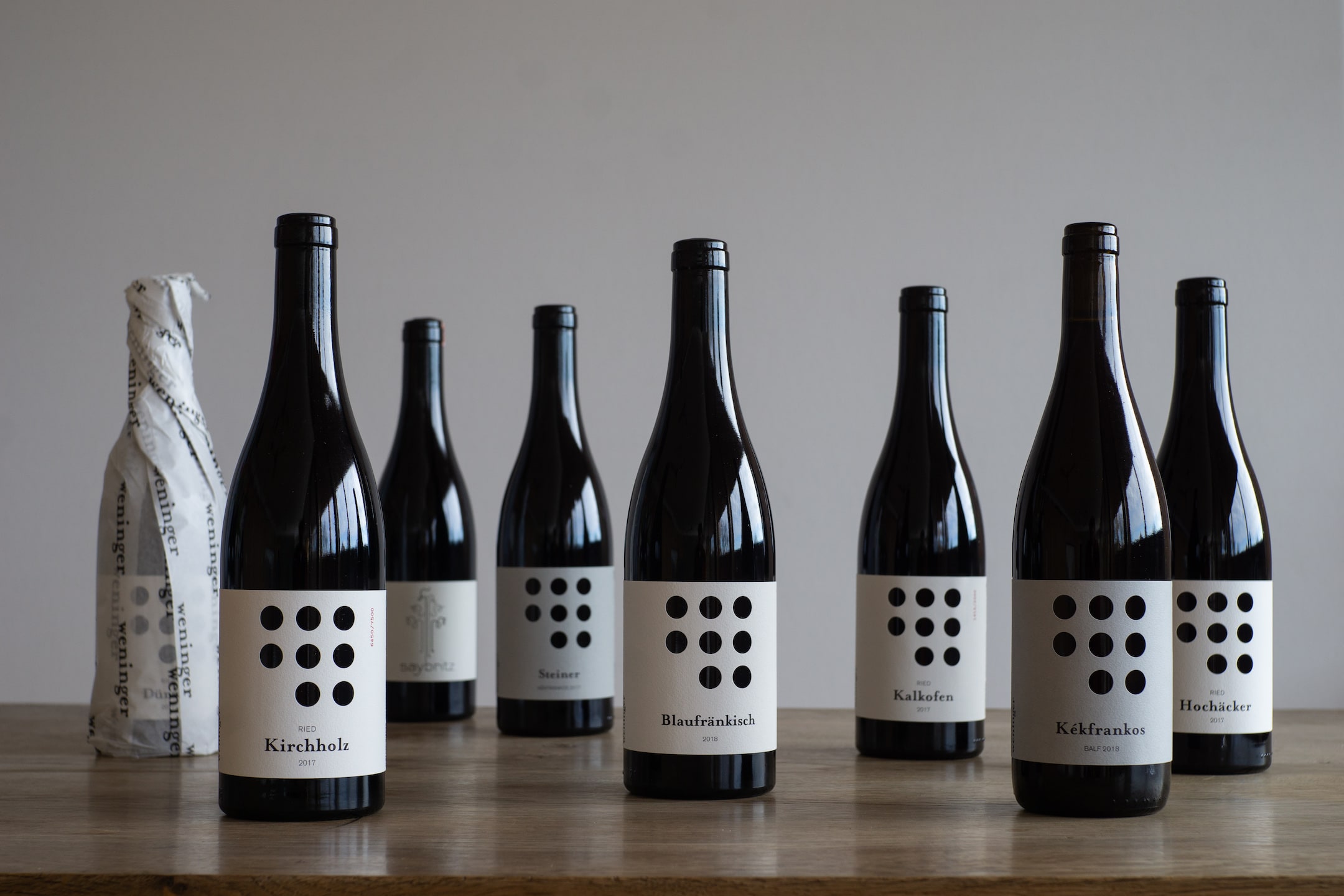
Hochäcker is among the oldest sites in Horitschon. Its rockless, hard, and loamy substratum is interspersed with iron, which is characteristic of traditional Blaufränkisch soil. Our forty-year-old vines produce highest quality grapes every harvest.
Red berry fruit, delicate forest berries, subtle notes of cherry, spices, and tobacco. Freshly structured on the palate. A complex wine, but not opulent. Dense and extremely concentrated thus ideal for aging.
Vintage
2023
Variety
Blaufränkisch
Alcohol
13%
Allergens
contains sulphites / vegan
Origin
Horitschon / Mittelburgenland
Climate
Pannonian with illyrian influences
Vineyard
Hochäcker
Soil
chalybeate clay with high coarse fraction
Cultivation method
organic, biodynamic according to Demeter & Respekt, certified by Lacon AT-BIO-402
The Kirchholz site borders directly on the Hochäcker site. Only a field path separates them, and yet on this side, the upper soil layer consisting of loam and sandy gravel can be as thick as half a meter, which enhances drainage. In its composition of clay and loam the subsoil is similar to that of the Hochäcker site. Here Blaufränkisch grapes grow on vines which can be up to sixty years old.
To bring out the traits of this rocky soil we have vinifyied the grapes from these sites separately since 2003. The wine is fruitier, bold, lively, and due to the age of the vines it has more character and vibrant tannins.
Variety
Blaufränkisch
Alcohol
13%
Allergens
contains sulphites / vegan
Origin
Horitschon / Mittelburgenland
Climate
Pannonian with illyrian influences
Vineyard
Kirchholz
Soil
Loamy clay soil, interspersed with sandy slate and coarse gravel
Cultivation method
organic, biodynamic according to Demeter & Respekt, certified by Lacon AT-BIO-402
The Steiner site in Sopron lies at the southwestern tip of Lake Neusiedl on a gentle, eastward-facing slope. In the 1680 town chronicles this site was classified as the finest and most valuable vineyard in all of western Hungary (present-day Burgenland). The gneiss and mica schist, which are present all the way to the surface, make the soil porous and thus dry and warm.
A very distinct wine. The rocky soil absorbs heat during the day. This delivers a lot of spice as well as dark berry and herbal aromas. The tannins compete for attention on the palate.
Vintage
2023
Variety
Kékfrankos (Blaufränkisch)
Alcohol
12.5%
Allergens
contains sulphites / vegan
Origin
Sopron
Climate
Pannonian
Vineyard
Steiner
Soil
mineral slate and rock (gneiss and mica schist)
Cultivation method
organic, biodynamic according to Respekt, certified by Biokontroll Hungaria HU-ÖKO 01
In Greataunt Emma Schürmann´s little vineyard - beautiful site on Eisenberg - Blaufränkisch grapes have grown for 50 years on a blue and green slate substratum beneath heavily calcareous clayey loamy soil. What the land and its people bring forth on this steep southern slope has awakened the desire in us to tap these resources too.
The rocky subsoil allows good drainage. This results in freshness and bright fruit; the clay in the topsoil imparts a delicate sweetness and body. The view from the steep site adds lightness to the wine. An elegant Blaufränkisch with plenty of finesse.
Vintage
2022
Variety
Blaufränkisch
Alcohol
12.5%
Allergens
contains sulphites / vegan
Origin
Eisenberg / Südburgenland
Climate
Illyrian
Vineyard
Saybritz
Soil
clay loess soil rich in lime, including blue-green slate soil
Cultivation method
organic, biodynamic according to Demeter & Respekt, certified by Lacon AT-BIO-402
Tasting note
Playful and finely woven, the nose opens with alluring aromas of spiced plum, juicy sour cherry and a delicate hint of leather, gently caressing the senses and setting the stage for a profound yet elegant Blaufränkisch. On the palate, it shows a purist character, carried by a lively, light-footed acidity and the finest tannins that awaken the taste buds. Nuances of black tea, beetroot, black pepper and blackcurrant add depth and seriousness without disturbing the balance. In its grace, as elegant as Brigitte Bardot, yet endowed with the firmness of a great Blaufränkisch, it reveals its schist soil origin, which lends it radiance and promises a great future. A wine that unites elegance and complexity while never losing its joyful, thirst-inducing charm. René Kollegger
In Greataunt Emma Schürmann´s little vineyard - beautiful site on Eisenberg - Blaufränkisch grapes have grown for 50 years on a blue and green slate substratum beneath heavily calcareous clayey loamy soil. What the land and its people bring forth on this steep southern slope has awakened the desire in us to tap these resources too.
The rocky subsoil allows good drainage. This results in freshness and bright fruit; the clay in the topsoil imparts a delicate sweetness and body. The view from the steep site adds lightness to the wine. An elegant Blaufränkisch with plenty of finesse.
Vintage
2023
Variety
Blaufränkisch
Alcohol
13%
Allergens
contains sulphites / vegan
Origin
Eisenberg / Südburgenland
Climate
Illyrian
Vineyard
Saybritz
Soil
clay loess soil rich in lime, including blue-green slate soil
Cultivation method
organic, biodynamic according to Demeter & Respekt, certified by Lacon AT-BIO-402
Surrounded by eighteenth-century mulberry trees, this south-facing site lies at an elevation of 340 meters above sea level. It is located in Ritzing, making it the most westerly vineyard of Central Burgenland. Climatically it is our coolest site; the soil and the southern orientation, however, provide warmth. In former times quicklime was produced here, which accounts for the high pH level in the soil.
A wine that challenges the palate - invigorating and youthful. A hint of bright berry fruit. The tannins of this Blaufränkisch become more delicate. They intermingle with the acidity and in this way produce a vibrating, almost electrifying finish. This combination is grippy on the palate and reminiscent of chalk dust.
Vintage
2023
Variety
Blaufränkisch
Alcohol
13%
Allergens
contains sulphites / vegan
Origin
Ritzing / Mittelburgenland
Climate
Pannonian with illyrian influences
Vineyard
Kalkofen
Soil
chalky warm soil, southern aspect
Cultivation method
organic, biodynamic according to Demeter & Respekt, certified by Lacon AT-BIO-402
Tasting note
What a year. A year of balance, in which fruit and structure lift each other into the highest spheres. Clearly recognizable as a wine from limestone soils.
The fine, gripping tannins on the palate feel as if they were ground even more finely than those of wines from other soils. The vitality this wine gives to the drinker is the great gift of limestone-grown wines.
It is as if the connection to coral reefs that died out 150 million years ago is still tangible. The structure of the wine seems born from the structure of the corals. And the magnificent blossoms this soil brings forth feel like a remembrance of the corals’ own colors. They reveal themselves in the fruit in the glass—from cool red berries to citrus fruits. Franz Weninger
A slightly southeastern-facing ridge. The site with the heaviest and deepest loamy topsoil and a very high clay content. Here is where our Blaufränkisch vines planted in 1960 grow. The soil is richc in iron, which can be seen clearly in the rust-brown patches throughout. The dense loamy layer always provides the roots with enough water. Our coolest soil.
The water in the soil gives the wine its freshness and delicate acidity. The clay imparts a round palate with an enourmously long finish. Ripe berry aromas with plenty of spice. A well-balanced wine that also radiates this sense of calmness.
Vintage
2023
Variety
Blaufränkisch
Alcohol
13%
Allergens
contains sulphites / vegan
Origin
Horitschon / Mittelburgenland
Climate
Pannonian with illyrian influences
Vineyard
Dürrau
Soil
chalybeate clay with high coarse fraction
Cultivation method
organic, biodynamic according to Demeter & Respekt, certified by Lacon AT-BIO-402
In the Weinland (wine country) of our dreams, wine flows in abundance alongside milk and honey. People live happily and grow old young.
A wine of the future, mostly from our young vineyards planted with hybrids, mainly Souvignier Gris.
Most people who tasted our first 2023 vintage in our cellar thought it was Furmint. It impresses with its precise acidity and, like Furmint, a very subtle fruit, which is more characterized by our vinification (long yeast ageing). It is somewhat more accessible than our Furmints.
Not everyone will know this, but in Austrian wine law, "Weinland" is the legal designation of origin for unfiltered wines from Burgenland and Lower Austria. Many of our colleagues are annoyed by this fantasy term, but we have decided to fill it with emotion. That's why our new white wine is simply called “Weinland”.
Vintage
2023
Alcohol
13%
Allergens
contains sulphites / vegan
Origin
Horitschon & Ritzing / Mittelburgenland
Climate
Pannonian with illyrian influences
Vineyard
different vineyards
Soil
chalybeate clay with high coarse !action such as chalky warm soil
Cultivation method
organic, biodynamic according to Demeter & Respekt, certified by Lacon AT-BIO-402
"Anyone who wants to experience what is meant by Vin Vivant - living wine - should take a look at the (2018) Fehérburgundi (Pinot Blanc). Thrived on slate soils in Franz Weninger's biodynamic vineyards on the Hungarian side of the Neusiedlersee.
A delicately scented, floral delicacy, wild flower meadows blooming in the nose, lemon balm, wet grass with a good portion of fresh lime and grapefruit zest.
On the palate incredibly precise and firm with mouthwashing juiciness thanks to its stimulating, slightly pointed acidity, restrained phenolics and saltiness.
Can you taste the minerality of the different soils and locations? I say yes.
A natural wine that couldn't be finer without being forced into some kind of corset or subordinating to certain dogmas. More than just an introduction to this wonderful world of wine for (far too) little money. " (Risto Rieger)
Variety
Fehérburgundi (Pinot Blanc / Weißburgunder)
Alcohol
12%
Allergens
contains sulphites / vegan
Origin
Sopron
Climate
Pannonian
Vineyard
Frettner
Soil
luvisol with deposits of weathered bedrock
Cultivation method
organic, biodynamic according to Respekt, certified by Lacon AT-BIO-402
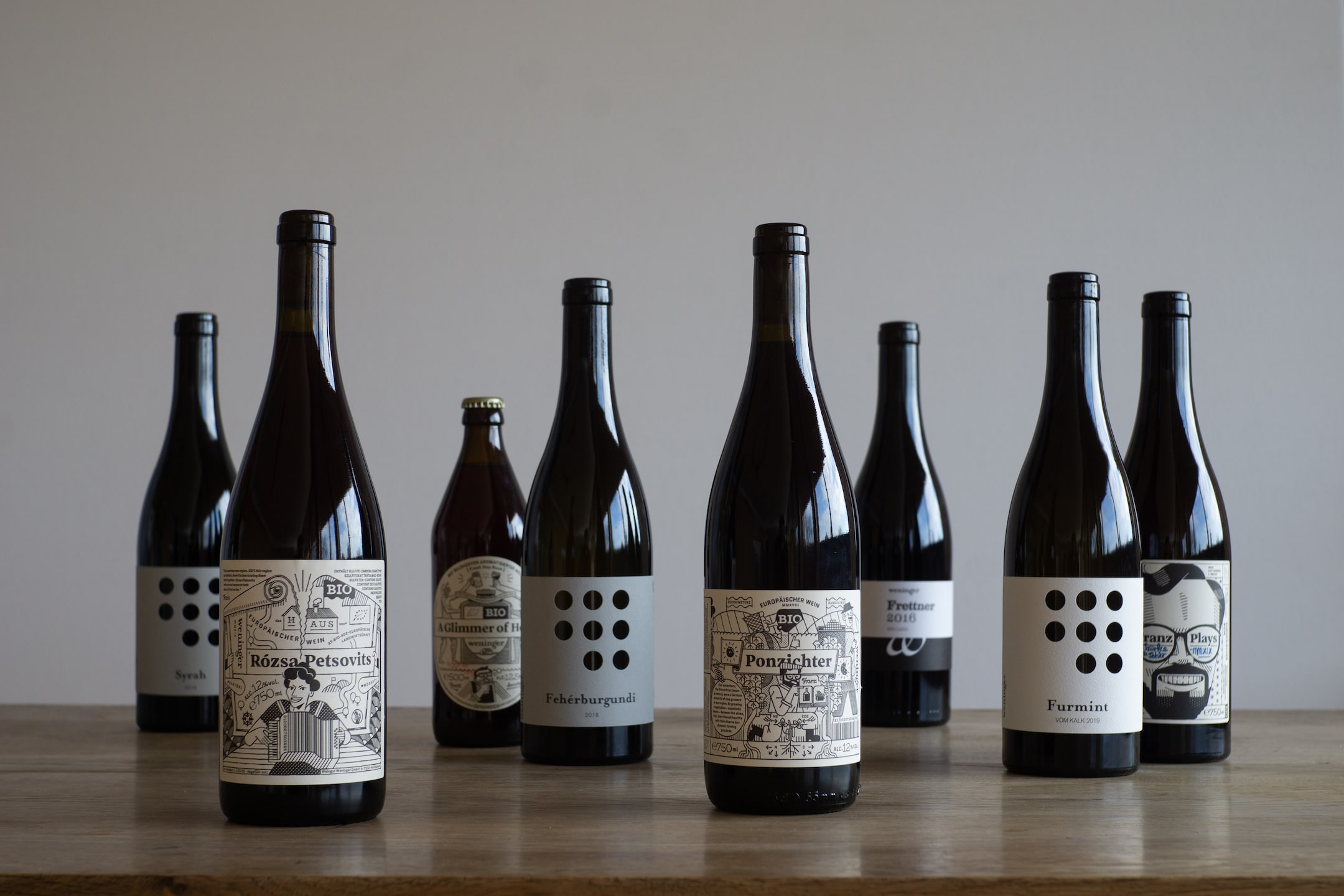
Rózsa Petsovits was born in Horitschon in 1921 – a year of transition. Horitschon became Austrian, yet the people remained who they were: German-speaking Hungarians, rooted between languages, countries and stories.
Just as the history of Burgenland is shaped by transitions, this wine, too, seeks to think beyond borders. It blends wines from Austria and Hungary – not as a statement, but as a matter of course. Origin is not erased here, but expanded.
Dedicated to Rózsa, Franz’ grandmother, a woman of great energy and presence. A rosé with conviction, leaving more than mere freshness behind. A wine for summer – and one that effortlessly accompanies cooler moments as well.
Variety
Blaufränkisch
Alcohol
12.5%
Allergens
vegan
Origin
Balf / Sopron and Horitschon & Ritzing / Mittelburgenland
Climate
Pannonian
Soil
gneiss / loam / limestone
Cultivation method
organic, biodynamic according to Respekt, certified by Lacon AT-BIO-402
Tasting note
My grandmother would have been so happy to drink this vintage!
For the first time vinified exclusively from Blaufränkisch grapes, Rózsa shows itself fruity and playful throughout the year. Blaufränkisch / Kékfrankos brings less spice to the glass, less dried hay than in previous vintages. Instead, there is more fruit – strawberry, perhaps even a hint of candied fruit.
Joy in the glass – that could be this wine’s subtitle.
And just as much: joy at the table, shared with friends. Franz Weninger
Ponzichter was the name given to the German-speaking winegrowers around Sopron. “Bean growers,” the Hungarians called them, because vegetables were planted between the vine rows, most notably beans.
What once arose out of necessity feels strikingly contemporary today. In difficult years, this mixed farming ensured survival. And beans, as legumes, have the ability to fix nitrogen from the air and return it to the soil. While we now consciously strive for closed, sustainable cycles in viticulture, our predecessors simply had no other choice.
Ponzichter is a light red wine from our biodynamically farmed vineyards in Hungary and Austria. A portion of the wine is fermented semi-carbonically, lending freshness and juiciness without obscuring its origin.
With each bottling, one barrel remains in the cellar and is blended into the following year’s wine, following the solera principle. This gives the youthful fruit greater depth and tension. The new Ponzichter is open, precise and highly drinkable, without losing substance.
Vintage
solera
Alcohol
12.5%
Allergens
contains sulphites / vegan
Origin
Horitschon / Mittelburgenland and Balf / Sopron
Climate
Pannonian with illyrian influences / Pannonian
Soil
loam / gneiss
Cultivation method
organic, biodynamic according to Respekt, certified by Lacon AT-BIO-402
Tasting note
Light-footed like Fred Astaire, this wine floats into the nose, unfolding a playful aromatic dance. Delicate notes of Chioggia beet, red currants, juicy damson plum and a subtle hint of rosehip tea. On the palate, it mirrors pure lightness – a graceful body carried by succulent sour cherry, a touch of bitter almond and, once again, a whisper of rosehip. Uncomplicated, charming and filled with natural drinkability, this red wine feels like a dancing companion for carefree moments. A fresh acidity and finely woven tannins provide structure and elegance without weighing down its lightness. Lightly chilled, it becomes the ideal partner for sunny hours on the terrace or a hearty bacon snack – a wine that brings joy of life into the glass. René Kollegger
Around the fence of one of our orchards, wild hops settled down a few years ago. None of our beer brewer friends wanted to work with this wild hops. Therefore, we decided to process it ourselves:
The fresh, uncooked hops was added to the wine during fermentation and remained with it for several weeks in the amphora. Since the wine was directly pressed Blaufränkisch, tannin and fruit on the palate of the Glimmer of Hops are attributed to the hops.
We love it as an aperitif - pure or mixed with tonic.
Varieties
Blaufränkisch
Alcohol
13%
Allergens
contains sulphites, vegan
Origin
Horitschon / Mittelburgenland
Climate
Pannonian
Cultivation method
organic, biodynamic according to Demeter and Respekt, certified by Lacon AT-BIO-402
When we planted the Frettner vineyard back in 1999, we ordered Pinot Noir for the chalky higher part of the vineyard. But three years later we discovered that we had received half Pinot Blanc and ten percent Pinot Gris vines. In 2018, we decided to give our Pinot Gris (Szürkebarát - „Grey Monk“ called in Hungarian) more space. Thus we fermented Pinot Gris and Pinot Blanc together on the skins. Since 2021, the whole Pinot family has finally got together: the skins of the Blanc and the whole berries of the Gris ferment in the direct pressed juice of the Noir. And this is the result.
In color between orange and slightly pink, the tannin is present on the palate, but not too demanding. Just the way we like to drink amber wine.
In terms of international varieties, we actually specialize in Cabernet Franc and Pinot Noir. Nevertheless, we still have a vineyard with Cabernet Sauvignon.
In 2021 we vinified these grapes relatively "old school" (hence the name "Régi iskola" - "old school" in Hungarian) - in used 500l barrels.
It looks very classic to us - a Cabernet that hasn't been over-extracted and doesn't show too much oak influence. Still typical Cabernet Sauvignon.
Variety
Cabernet Sauvignon
Alcohol
13,5%
Allergens
contains sulphites / vegan
Origin
Sopron
Climate
Pannonian
Cultivation method
organic, biodynamic according to Respekt, certified by Biokontroll Hungaria HU-ÖKO 01
The eight hectares of vineyards on the Frettner site lie at the edge of an oak forest and feature excellent loamy soils. The old rock of the mountains between the foothills of the Alps and Lake Neusiedl have transformed into brown soils with deposits of extremely weathered bedrock. The soil here is very deep and is rich in humus and lime deposits. Due to its proximity to the woods, cold air blows over the vineyards and keeps the grapes constantly cool.
For decades we have been working on this soil now and found out that the Cabernet Franc from this site is the most authentic.
Variety
Cabernet Franc
Alcohol
13%
Allergens
contains sulphites / vegan
Origin
Sopron
Climate
Pannonian
Vineyard
Frettner
Soil
luvisol with deposits of weathered bedrock
Cultivation method
organic, biodynamic according to Respekt, certified by Biokontroll Hungaria HU-ÖKO 01
T-Shirt color Indian Ink Grey
Round neck tee-shirt, single jersey
100% organic ring-spun combed cotton
Design by Christoph Gratzer
why we think hand harvest is the future read here.
T-Shirt Royal Blue
wear a statement for hand harvest
T-Shirt color Royal Blue
Round neck tee-shirt, single jersey
100% organic ring-spun combed cotton
Design by Christoph Gratzer
Why we fight for the future of hand harvest: read here.
T-Shirt Black
wear a statement for hand harvest
T-Shirt color Black
Round neck tee-shirt, single jersey
100% organic ring-spun combed cotton
Design by Christoph Gratzer
Why we fight for the future of hand harvest: read here.
aus dem Archiv
Hochäcker 2016
€ 34,66 / Litre
Hochäcker is among the oldest sites in Horitschon. Its rockless, hard, and loamy substratum is interspersed with iron, which is characteristic of traditional Blaufränkisch soil. Our forty-year-old vines produce highest quality grapes every harvest.
Red berry fruit, delicate forest berries, subtle notes of cherry, spices, and tobacco. Freshly structured on the palate. A complex wine, but not opulent. Dense and extremely concentrated thus ideal for aging.
Vintage
2016
Variety
Blaufränkisch
Alcohol
13%
Allergens
contains sulphites / vegan
Origin
Horitschon / Mittelburgenland
Climate
Pannonian with illyrian influences
Vineyard
Hochäcker
Soil
chalybeate clay with high coarse fraction
Cultivation method
organic, biodynamic according to Respekt, certified by Lacon AT- BIO-402
The Kirchholz site borders directly on the Hochäcker site. Only a field path separates them, and yet on this side, the upper soil layer consisting of loam and sandy gravel can be as thick as half a meter, which enhances drainage. In its composition of clay and loam the subsoil is similar to that of the Hochäcker site. Here Blaufränkisch grapes grow on vines which can be up to fourty years old.
To bring out the traits of this rocky soil we have vinifyied the grapes from these sites separately since 2003. The wine is fruitier, bold, lively, and due to the age of the vines it has more character and vibrant tannins.
Vintage
2015
Variety
Blaufränkisch
Alcohol
13.5%
Allergens
contains sulphites / vegan
Origin
Horitschon / Mittelburgenland
Climate
Pannonian with illyrian influences
Vineyard
Kirchholz
Soil
Loamy clay soil, interspersed with sandy slate and coarse gravel
Cultivation method
organic, biodynamic according to Respekt, certified by Lacon AT- BIO-402
Surrounded by eighteenth-century mulberry trees, this south-facing site lies at an elevation of 340 meters above sea level. It is located in Ritzing, making it the most westerly vineyard of Central Burgenland. Climatically it is our coolest site; the soil and the southern orientation, however, provide warmth. In former times quicklime was produced here, which accounts for the high pH level in the soil.
A wine that challenges the palate - invigorating and youthful. A hint of bright berry fruit. The tannins of this Blaufränkisch become more delicate. They intermingle with the acidity and in this way produce a vibrating, almost electrifying finish. This combination is grippy on the palate and reminiscent of chalk dust.
Vintage
2015
Variety
Blaufränkisch
Alcohol
14%
Allergens
contains sulphites / vegan
Origin
Horitschon / Mittelburgenland
Climate
Pannonian with illyrian influences
Vineyard
Kalkofen
Soil
chalky warm soil, southern aspect
Cultivation method
organic, biodynamic according to Respekt, certified by Lacon AT- BIO-402
Our varietal grape juice in cooperation with Maria & Michael Gross!
"Bright ruby with a pink shimmer – on the nose, cranberry, pomegranate, and black elderberry. On the palate, cherry and sour cherry dance in a play of sweet and sour, with freshness bringing a lively drive. Violet blossoms and spicy-floral notes add extra excitement to this magnificent food companion."
Pairs wonderfully with game dishes, a delight with mushroom risotto or oven-roasted beets. Our secret favorite: as a companion to baba ganoush with pomegranate!
Bottle
740 ml
Vintage
2025
Variety
Blaufränkisch
Alcohol
0,0%
Origin
Mittelburgenland
Climate
Influences from the Pannonian Plain and Lake Neusiedl
Altitude
210 m, gentle slopes
Soil
calcareous loam and clay soil
Age of vines
15-35 years
Drinking temperature
8-12° C
Drinking time
2025-2029
Allergens
low in histamine / suitable for vegans
Nutritional information
Energy 214 kJ / 51 kcal
Fat 0.01 g – of which saturates 0 g
Carbohydrate 12.9 g – of which sugars 12.4 g
Protein 0.01 g
Salt 0.01 g
Authentic wine vinegar is produced exclusively from grape wine. White wine vinegar is the slightly milder alternative, whilst vinegar made from red wine has a stronger taste, due to the higher content of tannins. Alongside the color, the quality of the wine plays a significant role. The aroma of good wines is passed on to the vinegar. And this principle is the essential of the vinegar production: The better the basic product, the more elaborated is the vinegar. Basically, the wine vinegar will have the same ingredients as the basic wine.
Pure red wine vinegar through fermentation / 8% acetic acid
Organic bitter without colorants, 20% Vol., 500ml, contains sulfites
Italian citrus fruits pass through the hands of Tristan and Daniel and meet Franz Weninger's grapes. The scent of bitter oranges rises into the nose and caresses the palate bittersweetly. This is what an aperitivo tastes like in its most natural form.
Super Cattivo can be enjoyed pure on ice, as a Spritz with Prosecco or sparkling water or in cocktails.
We are happy to support Tristan and Daniel in the production of their bitters. More information hier
Alcohol
20%
Allergens
contains sulphites
Super Cattivo Bergamotto
Bitter Aperitivo
Organic bitter without colorants, 18% vol., 500ml, contains sulfites
The tart aroma of Italian bergamot, embraced by herbs and the gentle scent of vanilla, meets Burgenland grapes.
The result is an aperitivo in its most natural form.
We are happy to support Tristan and Daniel in the production of their bitters. More information hier
Alcohol
18%
Allergens
contains sulphites
Super Cattivo Mandarino
Bitter Aperitivo
Organic bitter without colorants, 19% vol., 500ml, contains sulfites
The best of both worlds: The sweet bitterness of Italian citrus fruits and the beguiling freshness of Burgenland grapes combine to create an aperitivo in its most natural form.
Super Cattivo can be enjoyed pure on ice, as a Spritz with Prosecco or sparkling water or in cocktails.
We are happy to support Tristan and Daniel in the production of their bitters. More information hier
Hanzls Dorfgreißler welcomes you directly at our winery in Horitschon!
Here you can taste selected wines by the glass and purchase our entiry portfolio.
Opening hours: Tue - Fri 8:30 am - 6 pm | Sat 8 am - 12 pm